Manufacturing SMEs: smart factory and AI, a winning duo
a collaboration between kuriosIT and Baseline
KuriosIT and Baseline combine their expertise to offer an informed perspective on digital transformation in the manufacturing sector.
Part 1
Faced with global competition, the economic uncertainty of recent tariffs and increasing productivity demands, digital transformation and artificial intelligence (AI) are becoming an absolute necessity. Yet, for many manufacturing companies, the path seems strewn with pitfalls: where do you start when data is non-existent, only on paper, fragmented, inaccessible or in silos? How do you turn it into a real lever for growth?
In this series of two articles, we first introduce you to the basics of the smart factory and AI in manufacturing. The second article, which will follow shortly, will be devoted to concrete use cases, illustrating the value of having available, reliable and well-structured data.
The intelligent factory: the foundation of artificial intelligence
In a modern factory, data comes from multiple data sources: ERP, CMMS, MES, IoT sensors, PLCs, machines, tools, etc. Each of these sources holds part of the operational story, but unfortunately they are often compartmentalized, making global analysis difficult.
AI, on the other hand, needs to be fed with data in order to function properly and increase its capabilities tenfold. As a result, before we can reap any tangible benefits from this technology, we first need to ensure that the IT systems in place are relatively robust.
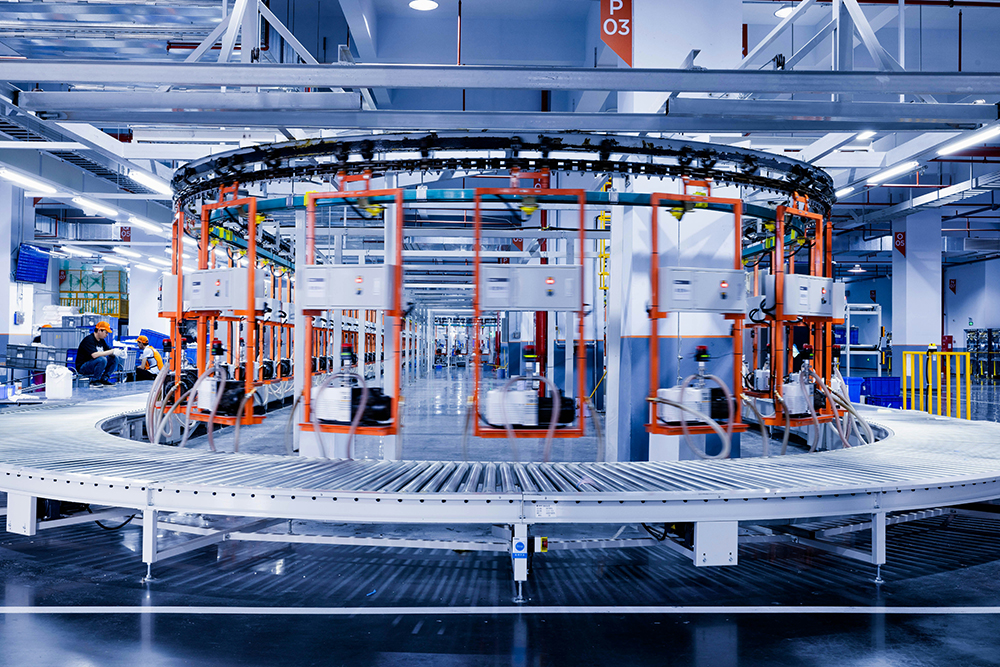
This is precisely where the concept of the smart factory comes into its own. A smart factory is an automated, connected production environment, where machines, sensors and IT systems collaborate in real time to optimize performance, quality and flexibility of operations. At a high level, the smart factory enables us to move from a fragmented vision to integrated operational intelligence, with systems that finally "talk to each other". It aims to achieve this in three ways:
Centralize data in real time;
Put these data into context (e.g., link a machine alarm to a production stage or maintenance operation);
And archive data in a structured way.
In concrete terms, to build a solid foundation, we recommend implementing the following principles progressively and according to priorities:
Floor data collection through automated acquisition by PLCs, sensors, vision systems, etc. Data must be collected directly at source to avoid data entry errors and loss of information;
Real-time analysis, to detect deviations, adjust production parameters and trigger alerts. It is therefore important to eliminate siloed systems and replace Excel spreadsheets, which limit the large-scale exploitation of data;
The collection and standardization of business data using specialized systems such as ERP (Enterprise Resource Planning), CMMS (Computerized Maintenance Management System) and MES (Manufacturing Execution System) ;
Consistent data historization, essential for traceability, continuous improvement and quality.
These foundations pave the way for more advanced solutions, especially those based on AI. It's not necessary to implement everything at once, but it's essential not to build on shaky foundations.
Artificial intelligence: data as raw material
The meteoric rise of artificial intelligence is largely due to advances in machine learning, a technique that enables systems to learn directly from data. That's why data isn't just a technical element: it's a central pillar of any AI initiative.
To make the most of data, here are a few guidelines to keep in mind:
Data quality is very important. This is a non-negotiable principle: if your data is of poor quality, incomplete or erroneous, the AI's conclusions will be just as bad. The trust you can place in an intelligent system depends directly on the reliability of its information sources. Integrating an intelligent factory solution helps make this data reliable right from the source, by automating data collection and reducing manual handling.
Start small, targeted and iterative. You don't have to plan a complete and costly overhaul of your IT systems to get started. The winning approach is to start small and build gradually. Each AI solution is designed for a specific task and therefore uses its own set of data. For example, a quotation generation tool might rely on historical quotations and technical drawings, while a production planning solution might use current orders, due dates and equipment set-up times. Ultimately, nothing prevents these specific solutions from feeding off each other, creating a richer, more powerful AI ecosystem.
Tailor data collection to real needs. Some AI projects are very data-intensive, while others are more focused. Anticipating future product demand, for example, may require data from a variety of sources, such as historical orders, distance and transport data, and economic indicators. Conversely, early detection of equipment anomalies may require a more restricted and highly specific data stream (e.g. vibrations, noise emissions) from real-time sensors. So it's important to ask yourself: what's important for my AI project?
Use data to measure your progress. An often underestimated aspect of data is its ability to establish a benchmark. Beyond feeding an algorithm, it is essential for evaluating your current performance and quantifying your gains. For example, a part rejection rate measured before and after the implementation of a quality control AI is perfect to illustrate how to concretely track the impact of the solution.
In conclusion, the key to success lies in choosing targeted AI projects with high added value. The initial investment in making your data accessible and usable is the preparatory work that will lay the foundations for your future success.
A winning combination
Now that we've taken stock of smart factory concepts, the importance of structuring data at source and the role of AI in adding value to it, how can this combination translate into benefits for manufacturing SMEs? Here are a few concrete examples:
Predict equipment failures before they occur to avoid costly, unplanned downtime;
Plan and schedule operations optimally, reducing downtime and maximizing productivity;
Synthesize data from disparate systems (e.g. ERP, CRM) to obtain a coherent, usable overview;
Improve quality control with real-time visual defect detection;
Optimize sales strategies with recommendations based on dynamic data analysis (e.g. intelligent pricing).
In conclusion, the smart factory and AI form a complementary duo: one enables data to be captured and structured in real time, while the other transforms this raw material into strategic intelligence. This complementarity generates efficiency and productivity gains that will set you apart from the competition.
Stay tuned! A second blog post will follow shortly, devoted to concrete use cases illustrating the added value of the smart factory combined with artificial intelligence.
Let's talk about your next big project!
Do you have a question, an idea or a project in mind?